

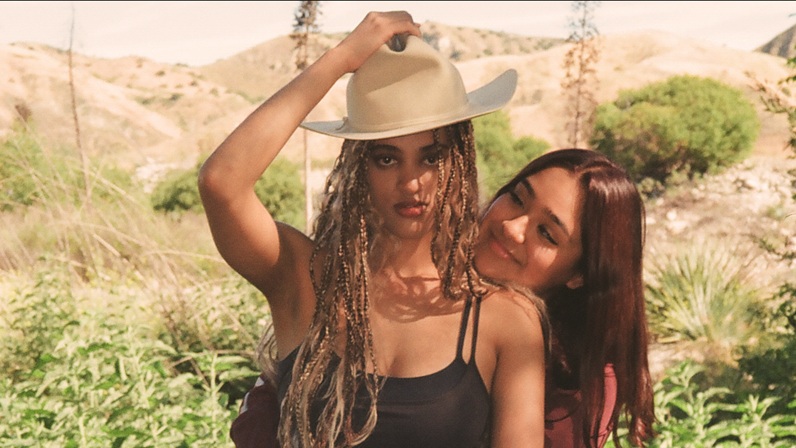
At a time when independent cinema continues to push boundaries and challenge conventional narratives, actress Kenia Hallow is steadily carving out a place for herself among a new generation of emotionally driven performers. From award-recognized short films to upcoming festival projects, Hallow’s work reflects a commitment not just to performance, but to storytelling that asks audiences to feel deeply and think critically.
With a background rooted in musical theatre, dance, and emotionally complex character work, Hallow has quickly emerged as a compelling presence on the independent film circuit. Her performances in Roses Are Red (2024) and the upcoming queer short Troye (2025) have established her as an actor drawn to layered narratives and deeply human characters.
In conversation, Hallow speaks thoughtfully about vulnerability, artistic growth, and her desire to create work that fosters empathy.


“I think storytelling is one of the few things that can genuinely change the way people see each other,” she says. “Film allows people to step into lives they may never fully understand otherwise.”
Hallow’s journey into acting began long before film sets and festival screenings. By the age of sixteen, she had already appeared in numerous musical theatre productions and received a Naledi Award nomination for her performance in The Three Little Pigs. Her earliest role, however, was a far humbler beginning.
“My first role was actually as a speaking carpet in Aladdin,” she laughs. “At the time, it felt monumental to me. I think that’s where I first realized how magical performance could be.”
That early love for performance evolved into years of dance and ballet training through the Royal Academy of Dance, an experience she credits with shaping the way she approaches physicality and emotional expression in her work today.
“Dance taught me discipline, but it also taught me how emotion exists physically,” Hallow explains. “Sometimes what a character isn’t saying is more important than the dialogue itself.”
Those instincts became especially important in Roses Are Red (2024), directed by Gabrielle Desroches. The experimental short explores themes of love, identity, and emotional acceptance, with Hallow portraying the physical manifestation of love itself.
“The film asks what it really means to be loved fully,” she says. “Not just romantically, but spiritually and emotionally. Playing something as abstract as ‘love’ was intimidating because it required me to move beyond realism and into something much more symbolic.”
The film resonated strongly on the festival circuit, receiving second runner-up recognition at the Lonely Wolf International Film Festival, a semi-finalist placement at the Planet Film Festival, and an Honorable Mention at the Los Angeles Underground Film Forum.
Now, Hallow is preparing for the release of Troye (2025), a queer coming-of-age short expected to enter the festival circuit in 2026 and 2027. In the film, she portrays Sophie, a young woman caught between societal expectations and her love for her best friend, Adeline.
“Being able to portray a character such as Sophie was a critical stepping stone in my acting career,” Hallow says. “She’s imperfect. She hurts people she loves. But all of her decisions come from hope and fear and wanting stability. I think audiences connect most to characters who feel human rather than heroic.”
That emotional complexity is something Hallow actively seeks in her work. Rather than pursuing roles built around likability, she gravitates toward characters wrestling with contradictions and difficult choices.
“I don’t think people are meant to be simple,” she says. “The characters I’m drawn to are the ones who exist in grey areas. That’s where the most honest storytelling happens.”
While her recent work has centered on independent film, Hallow has also expanded into commercial projects and digital media appearances, steadily building a multifaceted career. Still, she remains grounded in the artistic motivations that first brought her to performance.
“My goal has never really been fame,” she says. “I want to create stories that make people more compassionate toward one another. Especially toward people who are often overlooked or misunderstood.”
As the entertainment industry continues evolving toward more diverse and emotionally authentic storytelling, Hallow’s trajectory feels reflective of a broader shift within independent cinema itself: one that values vulnerability, nuance, and deeply personal narratives over spectacle alone.
And if her recent body of work is any indication, Kenia Hallow is only just beginning.